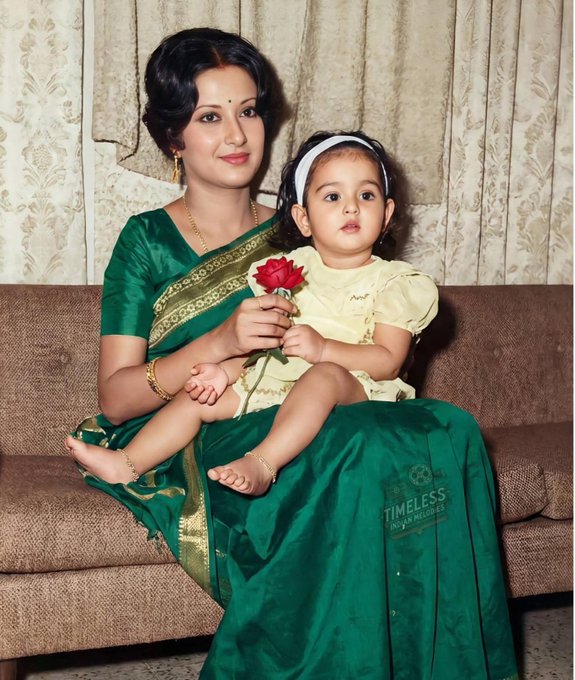
Moushumi Chatterjee recently shared a deeply emotional message on social media, reflecting on the life and loss of her daughter, Payal Chatterjee. The post, written on Payal’s birthday, is a poignant reminder that grief does not fade with time—it simply finds new ways to express itself.
In her words, Moushumi describes Payal not just as her first child, but as someone who shaped her identity as a woman and a mother. There is a quiet intimacy in that sentiment. For many parents, a first child marks a profound transformation, an initiation into responsibility, vulnerability, and unconditional love. Moushumi’s reflection captures that universal experience, while also grounding it in her deeply personal journey.
What stands out most is the way she frames her loss. Calling it “the most painful horrific moment” of her life, she doesn’t attempt to soften the truth of grief. Instead, she acknowledges it in its rawest form. Yet, even within that pain, there is tenderness. Her wish that Payal is “happy and safe wherever she is” reflects a kind of enduring maternal instinct, one that transcends physical presence.
The message also highlights how remembrance becomes an act of love. By marking Payal’s birthday publicly, Moushumi keeps her daughter’s memory alive, inviting others to witness not just her sorrow, but her bond. It’s a quiet defiance against forgetting.
For audiences who remember Moushumi Chatterjee from her celebrated film career, this post reveals a different dimension of her life,one far removed from the screen. It humanizes her in a way that fame often obscures. Behind the iconic roles and public persona is a mother who continues to carry her child in memory, in love, and in loss.
In sharing this message, Moushumi has also opened a space for others who have experienced similar grief. There is something deeply connecting about such honesty; it reminds us that even the most private pain can resonate widely, creating empathy and understanding.
Ultimately, her tribute is not just about loss. It is about love that persists, about the imprint a child leaves on a parent’s soul, and about the quiet rituals, like remembering a birthday, that keep that connection alive across time and absence.